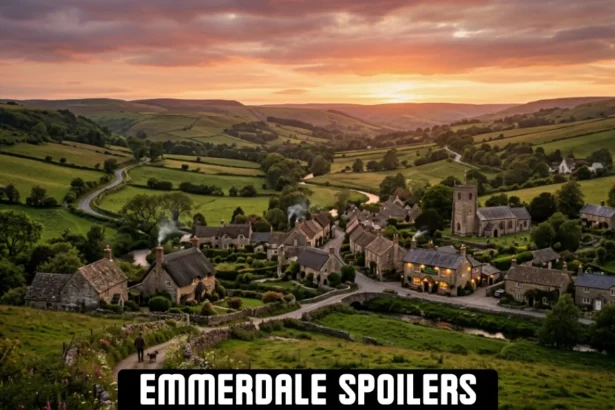
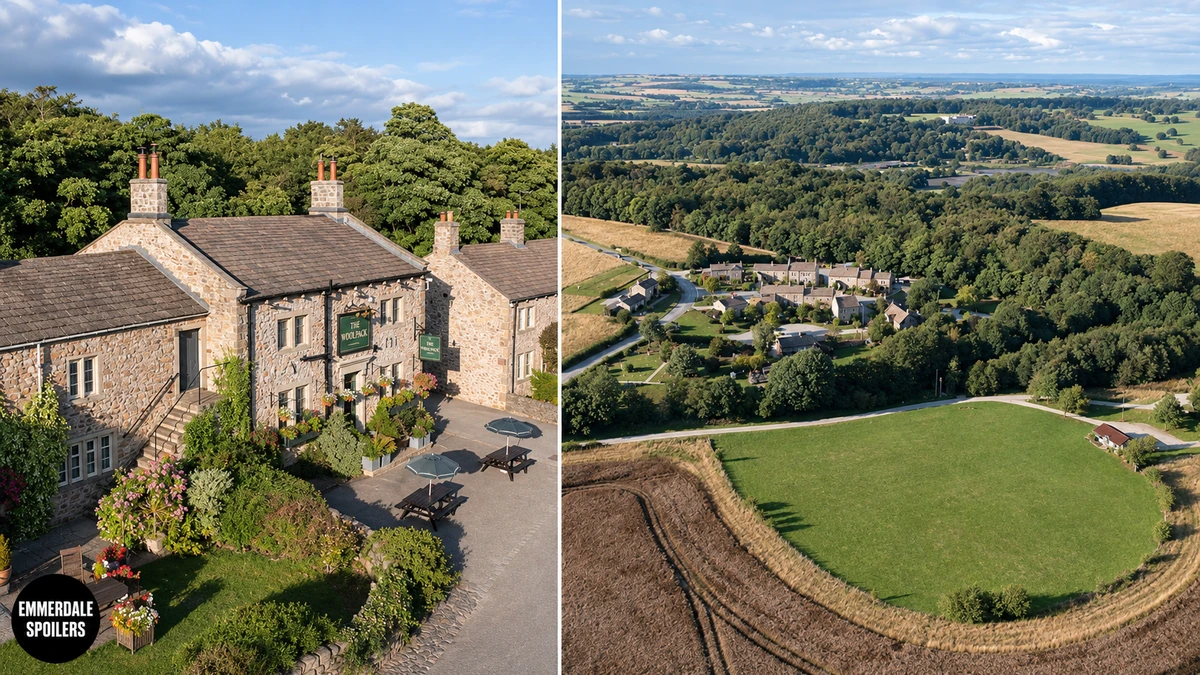
ITV Studios is asking Leeds City Council for permission to keep filming at the Emmerdale village set on the Harewood Estate after its temporary consent expires on 3 June 2027. The broadcaster argues that reusing the existing set would avoid some of the extra travel and temporary power that filming elsewhere could require.
The application, 26/03852/FU, was validated on 20 July 2026. Planning records available on 9 November still listed it as awaiting a decision. ITV has filed a separate application for the future of the village tours.
What Does ITV Want to Keep at Harewood?
The application covers the continued use of the working production site, including existing structures, access, parking and landscaping. The Gardens Trust, which was consulted on the plans, said the application covered structures already on the site.
The exterior village includes houses, shops, the church and The Woolpack. The location gives crews several places to film within one production base. Some interiors, including the Woolpack bar, are filmed separately in Leeds studios.
The purpose-built village has appeared on screen since filming moved to Harewood in 1998. Before that, Arncliffe and then Esholt provided the village backdrop. ITV’s anniversary coverage traced the move to the demands of making more episodes and the crowds that gathered to watch filming in Esholt.
The current permission carries a restoration condition. Unless ITV secures further consent, the production site would have to be returned to its previous condition within six months of the permission expiring, according to earlier local democracy reporting.
Why Has ITV Raised Climate Concerns?
ITV’s argument starts with the work involved in moving an outdoor scene. Actors and crew need to get to the new location, and production vehicles may need to carry equipment and facilities there. A location without suitable power can also require a temporary generator.
In planning documents reported by Radio Times, ITV used the façade of The Hide restaurant to illustrate the point. Moving those scenes away from the main village could increase travel for cast, crew and production vehicles. ITV also raised the possibility of generator noise affecting people near a temporary filming location.
Keeping several sets close together would give the production more options when it needs to change its filming schedule. ITV has already cited rooftop solar panels on an Emmerdale barn as an example of work it has done to reduce emissions. The planning argument concerns the potential impact of retaining or relocating the set. The published accounts reviewed give no figure for the amount of carbon the proposal would save.
What Do ITV’s 2030 and 2050 Targets Mean?
The planning case refers to ITV’s 2030 climate strategy. The company’s published Climate Transition Plan sets interim emissions targets for 2030 and a long-term net zero target for 2050 across its operations and supply chain.
Using 2019 as its baseline, ITV’s plan calls for a 46.2% cut by 2030 in emissions from its own operations and purchased energy, and a 28% cut in wider value-chain emissions. The plan calls for a 90% reduction across all those emissions by 2050, with the remaining emissions to be addressed through carbon removals.
The Harewood application makes the case for one production decision within that wider strategy. ITV argues that keeping a site it already uses could reduce the need for travel and temporary facilities.
Why Does Burden Head Farm Matter to the Soap?
Burden Head Farmstead offers a different kind of flexibility from the main village street. Its buildings can be dressed to represent several places in the story. The farmhouse has appeared as the Home Farm groundsman’s cottage and stood in for the Welsh holiday cottage visited by Belle Dingle and Tom King in 2024.
The planning material describes the farmstead as a swing set, a location that crews can adapt for different scenes. A farmhouse and its outbuildings can provide several distinct views without the production arranging a separate site for each one. That is where ITV sees an opportunity to cut journeys while keeping the rural settings viewers recognise.
What Have Local Consultees Said?
Yorkshire Wildlife Trust supported the proposal and backed a request for extra planting alongside part of the access track to reduce disturbance. The ecological material discussed in the reporting identifies bats, barn owls, red kites and brown hares among the wildlife found in the area.
The Gardens Trust and Yorkshire Gardens Trust also submitted a response. They raised no objection to retaining the existing set, saying woodland largely screens it from the registered landscape at Harewood House. They asked to be consulted on future changes or additions if the council grants permission.
Radio Times reported that objections were also submitted during the consultation. The available planning records still showed the application as pending after the consultation closed.
Are the Emmerdale Village Tours Part of the Same Application?
ITV’s separate application, 26/05802/FU, covers visitor tours and the associated parking and access. The proposal would allow visitors to travel directly to the site, changing the arrangements described in our Emmerdale Village Tour guide, where visitors meet at Harewood House before transferring by coach.
Harewood Parish Council said residents had repeatedly raised concerns about coaches using narrow lanes through Weardley. ITV’s proposal aims to address those concerns and, according to the Yorkshire Post’s reporting on the application, does not seek to increase visitor numbers.
For viewers following the future of the village, 26/03852/FU is the application to watch for continued filming. 26/05802/FU is the one to check for changes to how fans would reach the set.