Emmerdale began on October 16, 1972, as Emmerdale Farm, a lunchtime drama created by Kevin Laffan for Yorkshire Television. Its original plan covered just 13 weeks. Instead, the programme grew into a continuing soap and celebrated its 54th anniversary on October 16, 2026.
Its longevity has several explanations. The original family drama developed into a larger village story, characters changed across generations, and ITV continued adapting the programme to different viewing habits.
Crucially, Emmerdale does not depend on one central mystery or a single character’s journey. Individual stories can end while life elsewhere in the village continues.
How Emmerdale Started in 1972
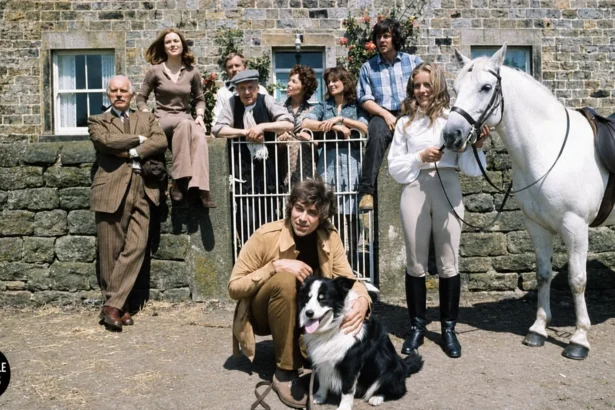
The first episode introduced a family dealing with a death. Jacob Sugden’s funeral brought the Sugden household together while the return of Jack Sugden created tension over the future of Emmerdale Farm.
Sheila Mercier played Annie Sugden, the recently widowed mother trying to hold the household together. Andrew Burt played Jack Sugden, while Frazer Hines appeared as Joe Sugden. Their disagreements gave the programme an immediate source of conflict.
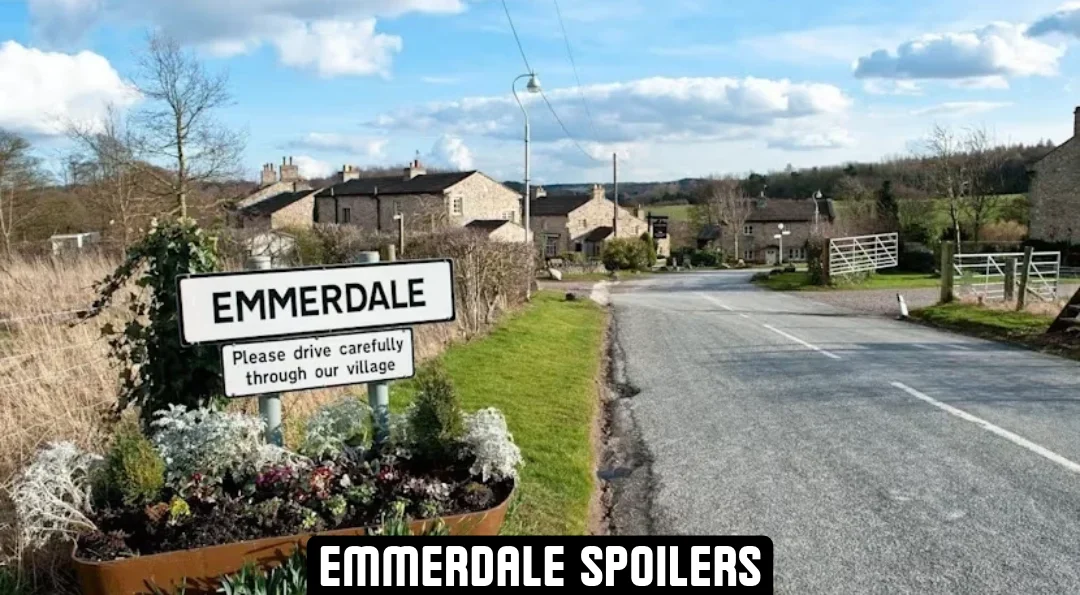
The setting was the fictional Yorkshire village of Beckindale. Farming shaped the characters’ work, finances and relationships, making the land central to the drama.
The British Film Institute describes the original programme as a lunchtime serial about the Sugden family living and working on their farm. That focus gave early episodes a clear identity: the characters’ home and livelihood were closely connected.
Beginning with a funeral also created several questions at once. Who would control the farm? Who had earned a say in its future? Could relatives with different ambitions continue living and working together?
Why the Original 13-Week Plan Expanded
ITV’s historical account confirms that Emmerdale Farm was initially intended to fill a lunchtime slot for 13 weeks. The original broadcast pattern involved two daytime episodes each week.
However, the programme continued beyond that initial period. Its history records extensions as the audience responded to the serial, eventually establishing a much longer future.
The original premise offered room for further development. Resolving the immediate inheritance dispute would not settle every disagreement within the household. Relationships, employment, money and neighboring landowners could generate additional stories.
That distinction helps explain the transition from a short commission to continuing drama. The production did not need to stretch Jacob Sugden’s funeral into decades of television. It could follow the consequences of the opening events and introduce new problems.
The initial plan supplied the starting point. Continued commissioning allowed the programme to develop beyond it.
Why Emmerdale Can Continue Without a Final Episode
Emmerdale uses the continuing structure associated with soap opera. Several storylines unfold alongside one another, often reaching their turning points at different times.
A relationship might end while another household faces financial trouble. A departure can close one character’s story while leaving relatives to deal with its consequences. The programme therefore has opportunities to move forward without abandoning its established world.
This helps explain why a soap can last much longer than a drama built around one investigation or a limited sequence of events. There is no requirement for every village storyline to reach a final resolution together.
Long histories also give later events additional meaning. A disagreement about property can connect with an older family conflict. A returning character can bring unfinished relationships back into view.
These are features of the format rather than a guarantee of success. The continuing structure creates possibilities, but writers and performers still need to give viewers reasons to care about what happens next.
Roxy Shahidi’s years in Emmerdale provide an example of that continuing format, with Leyla Harding developing across two lengthy runs before her story ended in 2025.
How New Families Changed the Programme
Emmerdale’s survival also involved expanding beyond its original household. The Sugden family remained important, but the village gradually supported a much broader group of residents.
The British Film Institute identifies the Tate and Dingle families among the households associated with the programme’s later development. Their introduction created relationships and conflicts that did not depend entirely on the original farming story.
That expansion matters when considering longevity. A programme tied permanently to its first cast would have limited options as performers departed. A village setting allows new residents to arrive while familiar places provide continuity.
The programme dropped “Farm” from its title in November 1989. The shorter name reflected a widening focus on the community, although farming remained part of its history and setting.
The appeal was also broader than dramatic confrontations. Speaking to STV during the 50th-anniversary celebrations in 2022, Bob Hope actor Tony Audenshaw highlighted the programme’s combination of comedy, drama, recognizable characters and countryside scenery.
That observation suggests an important balance: major developments attract attention, while everyday relationships help give the village its personality.
Why the 1993 Plane Crash Mattered
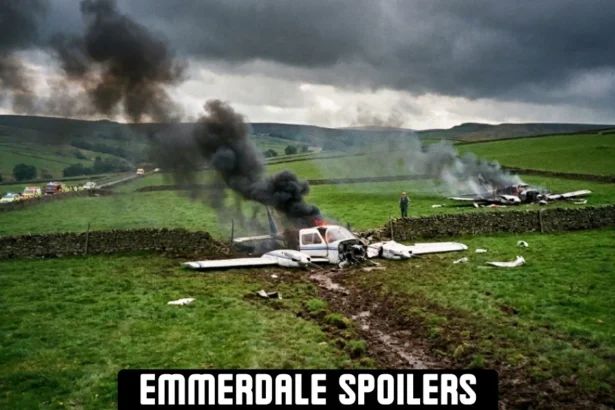
The plane crash storyline, which began on December 30, 1993, became one of Emmerdale’s most significant turning points. The disaster killed four established characters and caused extensive damage across Beckindale.
ITV’s historical account identifies the storyline and its aftermath as a period of exceptional audience interest. It demonstrated that the programme could attract attention through a major event affecting the wider community.
However, the crash matters for more than the spectacle. Its consequences created further stories involving bereavement, injury, suspicion and rebuilding. The village’s identity also changed when Beckindale became known as Emmerdale in 1994.
It would be too simple to credit one disaster with the programme’s entire survival. Emmerdale had already been running for more than 20 years when the crash aired.
The storyline is better understood as a major reinvention within an existing programme. It showed how an established setting could support a different scale of drama while retaining connections to familiar characters.
How Emmerdale Has Adapted to Modern Viewing
A long-running programme also needs ways to reach people whose routines change. ITV’s adjustments to Emmerdale’s schedule and streaming releases provide a documented example of that adaptation.
Under the scheduling pattern introduced in January 2026, regular Emmerdale episodes occupy 30-minute slots at 8pm on ITV1 from Monday to Friday. Episodes also receive an earlier release on ITVX, subject to scheduling changes.
When announcing the changes, ITV said its research showed that shorter installments suited changing viewing habits. The broadcaster also acknowledged that many soap viewers continued watching through the traditional television schedule.
Subsequent figures offered evidence that streaming was important. In February 2026, ITV reported that both Emmerdale and Coronation Street had achieved their highest monthly streaming totals during January.
That does not mean every audience measure has risen continuously or that the programme’s future is guaranteed. It shows that its continued life involves distribution and commissioning decisions alongside storytelling.
Emmerdale has lasted because it has repeatedly developed beyond its starting point. A short farming serial became a village drama, new generations replaced departing characters, and different ways of watching helped the programme remain accessible.