If you have seen Classic Emmerdale listed beside Emmerdale and wondered whether they are two different shows, the answer is no. Classic Emmerdale is ITV’s label for repeats of older episodes. Emmerdale is the continuing soap, with new stories taking place in the present day.
That simple distinction matters when a familiar character appears in an old episode, a relationship looks completely different, or someone discusses an event that happened years before the current storyline. You are watching different points in one long history, not competing versions of the village.
What counts as Classic Emmerdale?
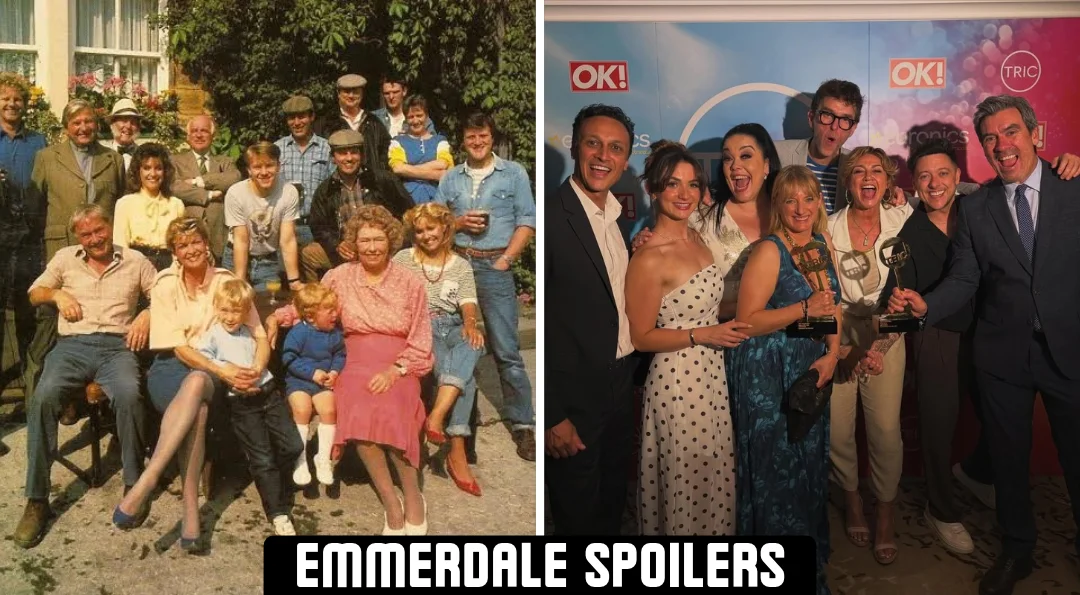
“Classic” does not mean only the earliest episodes. Emmerdale began in 1972 under the title Emmerdale Farm. The name changed to Emmerdale in 1989 as the programme’s focus extended beyond the farm and further into village life.
ITV uses Classic Emmerdale as a viewing label for older episodes from across that history. Some repeats may feel strongly tied to the programme’s farming roots. Others feature the larger families, businesses and conflicts that viewers associate with later decades. The year an episode is repeated is not the year its story takes place.
That is why it helps to check an episode’s original broadcast date or its position in a series. An episode labelled “classic” could be much more recent than the 1970s. The label tells you that it is a repeat, not that every episode comes from one particular era.
How has the storytelling changed?
Early Emmerdale Farm put considerable attention on the Sugden family, the farm and the rhythms of a rural community. Over time, the village and its wider cast became more central. Relationships, rivalries and major events gave the programme a broader canvas.
The Emmerdale plane crash in 1993 is one of the best known moments in that evolution. It changed the village and remains a useful landmark when looking back at the soap’s history. It does not mean every episode before it was quiet, or that every episode after it became a disaster story.
The comparison depends on which classic period you are watching. An episode from the early farm years may have a different pace and focus from a later repeat. A repeat from a much later decade may already feel close to contemporary Emmerdale in its mix of family arguments, secrets and sudden twists.
Today’s episodes build on that accumulated history while concentrating on the characters and conflicts currently in the village. They are written for people following the ongoing story. Classic episodes let you see how earlier chapters unfolded when they were first told.
Why do characters seem different in the repeats?
Years of story can change a character’s family, home, friendships and reputation. Watching an older episode after a current one can therefore be surprising. A couple may still be together in the repeat. A long standing feud may not have begun. A character who has since left the village may be part of its everyday life.
None of this is a continuity mistake. The repeat shows an earlier point on the same timeline.
It can also reveal why present day relationships carry so much weight. Hearing characters refer to a loss or betrayal is one thing; watching the original scenes gives that history a different impact. Equally, you do not need to know every past episode to understand the current soap. New stories provide their own context, even when older events still matter.
Cast appearances are another clue. The actors and characters you see depend on the episode’s original era, not on who is appearing in the newest episodes. If you are searching for a particular character, checking dates is usually more useful than assuming every classic repeat will include them.
Where can you watch each version?
New Emmerdale episodes are shown on ITV1 and available through ITVX. Broadcast times and online release arrangements can change, particularly when the television schedule is disrupted, so check the current ITV listings when planning to watch.
Classic Emmerdale has been shown as repeats on ITV3, and ITVX has a dedicated Classic Emmerdale collection. The episodes available online can change. Do not assume the collection contains every episode from 1972 onwards, or that a missing episode has been removed from the programme’s history.
The most useful viewing choice is straightforward. Watch new Emmerdale if you want to follow what happens next. Watch Classic Emmerdale if you want to revisit an earlier period, explore a character’s background or see a famous storyline in its original context.
Should new viewers start with the classic episodes?
Only if they want to. Emmerdale has been running for decades, so starting at the very beginning is not a practical requirement for enjoying the current series. You can begin with today’s episodes and look up an older storyline when it becomes relevant.
Classic Emmerdale works particularly well when you have a question. How did a family relationship develop? What was the village like before a major event? Was a character always this way? Following a specific period can answer those questions more clearly than jumping between unrelated repeats.
Watching out of order may reveal the outcome of an old storyline before you reach it. That is worth remembering if you want the earlier episodes to retain their surprises. Otherwise, there is no wrong entry point. Both labels lead to the same village, just at different times in its life.
Common questions
Is Classic Emmerdale a separate series?
No. It is a label for repeats of earlier episodes from Emmerdale’s continuing history. It is not a reboot or an alternative timeline.
Is Classic Emmerdale the same as Emmerdale Farm?
Not exactly. Emmerdale Farm was the programme’s original title until 1989. Classic Emmerdale can include episodes from later years as well as material from the farm era.
Do I need to watch Classic Emmerdale to understand current episodes?
No. The repeats can add context and make older references more meaningful, but you can follow the current story without watching decades of past episodes.